

The MV X-Press Pearl incident, one of the worst marine ecological disasters in Sri Lanka’s history, left a devastating mark not only on the coastline but also on the vibrant and delicate marine ecosystems of the Indian Ocean. When the Singapore-flagged cargo ship caught fire and sank off the coast of Colombo in May 2021, it unleashed a toxic cocktail of chemicals, plastics, and heavy metals into the ocean, causing lasting damage to sea life in the region.
A Toxic Legacy
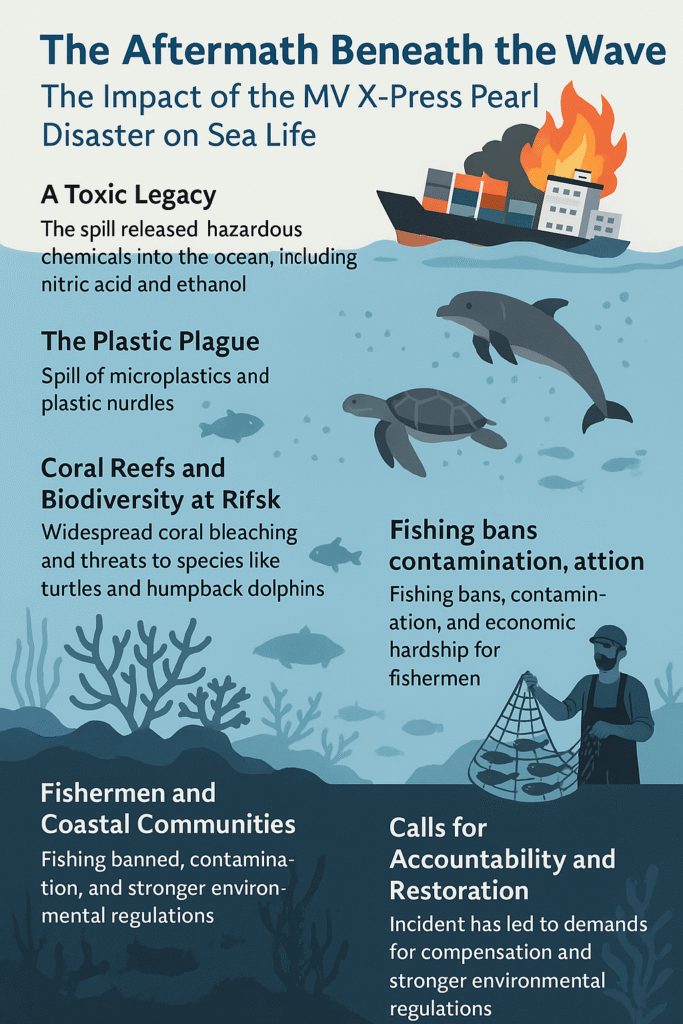
The vessel was carrying 1,486 containers, including 25 tonnes of nitric acid, ethanol, caustic soda, methanol, and billions of plastic nurdles (raw plastic pellets). As the fire raged for days and the ship eventually sank, the containers burst open, spilling their hazardous contents into the water.
The chemical runoff created an immediate toxic zone, contaminating the surrounding waters. Scientists observed dangerously low levels of dissolved oxygen, which led to the suffocation and death of countless marine organisms. Fish, crabs, eels, and even dolphins washed ashore in droves, bearing signs of chemical burns and internal damage.
The Plastic Plague
Perhaps one of the most visible and lingering effects of the disaster was the release of microplastics and plastic nurdles. These tiny pellets, now dubbed the “second tsunami of plastic,” blanketed Sri Lanka’s western coastline. Marine animals — mistaking them for food — consumed the nurdles, leading to internal blockages, starvation, and death.
Turtles were found dead with plastic debris in their digestive tracts. Fish exhibited signs of microplastic contamination, which not only threatened their health but posed a long-term danger to the food chain, including humans who consume seafood.
Coral Reefs and Biodiversity at Risk
Sri Lanka’s coastal waters are home to vibrant coral reef systems and numerous endangered species. Following the incident, marine biologists reported widespread coral bleaching, with some reefs showing signs of stress due to chemical exposure. The pollutants interfered with coral reproduction and larval development, potentially affecting reef regeneration for years.
Species such as the green turtle (Chelonia mydas), olive ridley turtle (Lepidochelys olivacea), and humpback dolphins — already vulnerable due to climate change and human activities — faced new threats from the toxic spill. Nesting sites were contaminated, and marine mammals suffered from both direct exposure and loss of food sources.
Fishermen and Coastal Communities
The effects of the X-Press Pearl disaster rippled beyond marine biology, hitting the livelihoods of thousands of coastal fishermen. Fishing was banned in affected areas due to contamination concerns, and the stigma around seafood safety led to a drop in demand — even from unaffected regions.
This not only caused severe economic hardship for families dependent on the sea but also highlighted the interconnectedness between healthy marine ecosystems and human well-being.
Calls for Accountability and Restoration
Following the disaster, Sri Lanka sought compensation and stronger environmental regulations. While cleanup efforts have been ongoing, environmentalists argue that the damage may take decades to fully assess and recover from. Restoration of marine ecosystems will require international cooperation, sustained funding, and long-term ecological monitoring.
A Cautionary Tale
The MV X-Press Pearl serves as a stark reminder of the vulnerability of marine ecosystems in the face of human negligence. It underscores the need for stricter maritime safety protocols, better waste management systems, and global accountability for environmental disasters.
More importantly, it calls for a renewed commitment to protecting ocean life — not just for the sake of biodiversity, but for the survival and prosperity of communities that rely on the sea every day.